social strategy/
Business Context
A furniture and bathroom retailer with minimal social media presence and no defined strategy. Content was inconsistent, lacked clear direction, and social channels were not contributing to measurable business outcomes.
Objective
Establish a clear and consistent social media presence
Increase brand awareness and audience engagement
Position the brand as both aspirational and functional within the home & interiors market
Generate traffic and support revenue through social media
Reduce reliance on paid channels such as Google Ads. Industry knowledge, trends, and expertise to establish credibility with new audiences.
Audience & Positioning
Defined key audiences: homeowners, renovators, and design-conscious consumers and focused on audiences that we needed to target to bring in new customers.
Positioned the brand to balance inspiration (design-led content) with practical value (product-focused messaging)
Platform & Content Direction
Prioritised visually-led platforms to align with the nature of the product
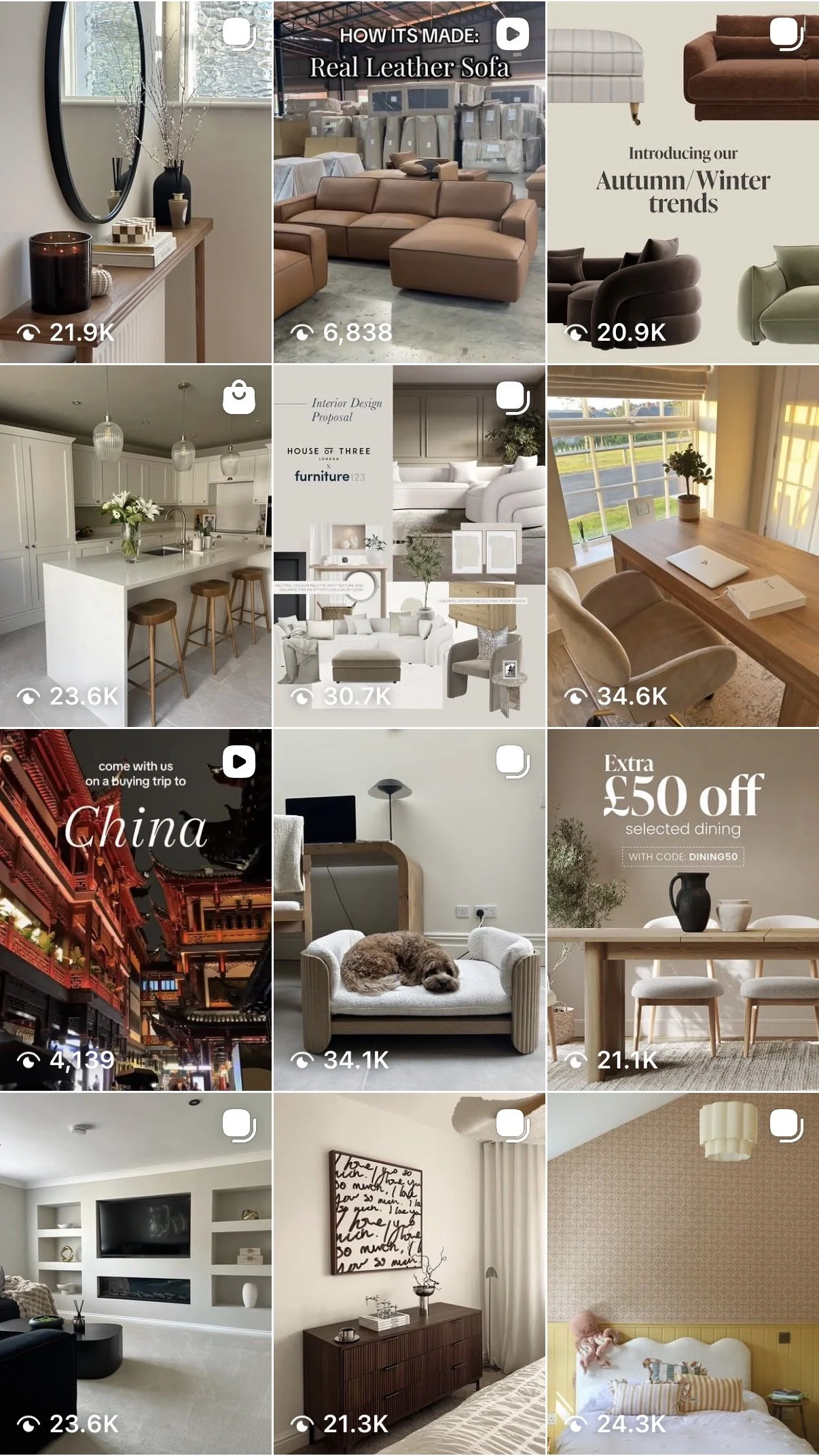
Shifted content from product-based to a lifestyle and inspiration-led approach
Incorporated short-form video to increase reach and engagement
Content Pillars
Established clear pillars to ensure consistency and direction:
Inspiration: interior styling, trends, and room ideas
Product Highlights: key products with clear value propositions
Educational Content/ Tips and Guidance (e.g. Interior Trends, space optimisation)
Behind the Scenes: Showcasing brand personality, team, and process to build trust with the consumer
Execution
Built and managed a structured content calendar aligned with seasonal trends and product focus. Introduced a consistent posting schedule, significantly improving visibility and engagement, using analytics to see when followers engaged most with our content.
Using data created a mix of content formats, including:
High-quality static imagery
Short-form video (Reels)
Before-and-after transformations
Made sure visual consistency and brand alignment across all posts tie in with the brand identity across all marketing channels and on-site, by collaborating with internal teams, this was a seamless approach.
Growth Initiatives
Introduced influencer partnerships to expand reach and connect with new audiences in the home and interiors space.
Leveraged creator content to enhance brand credibility and relatability and shifted social media from a passive platform into an active growth and acquisition channel bringing in revenue for the business.
Results
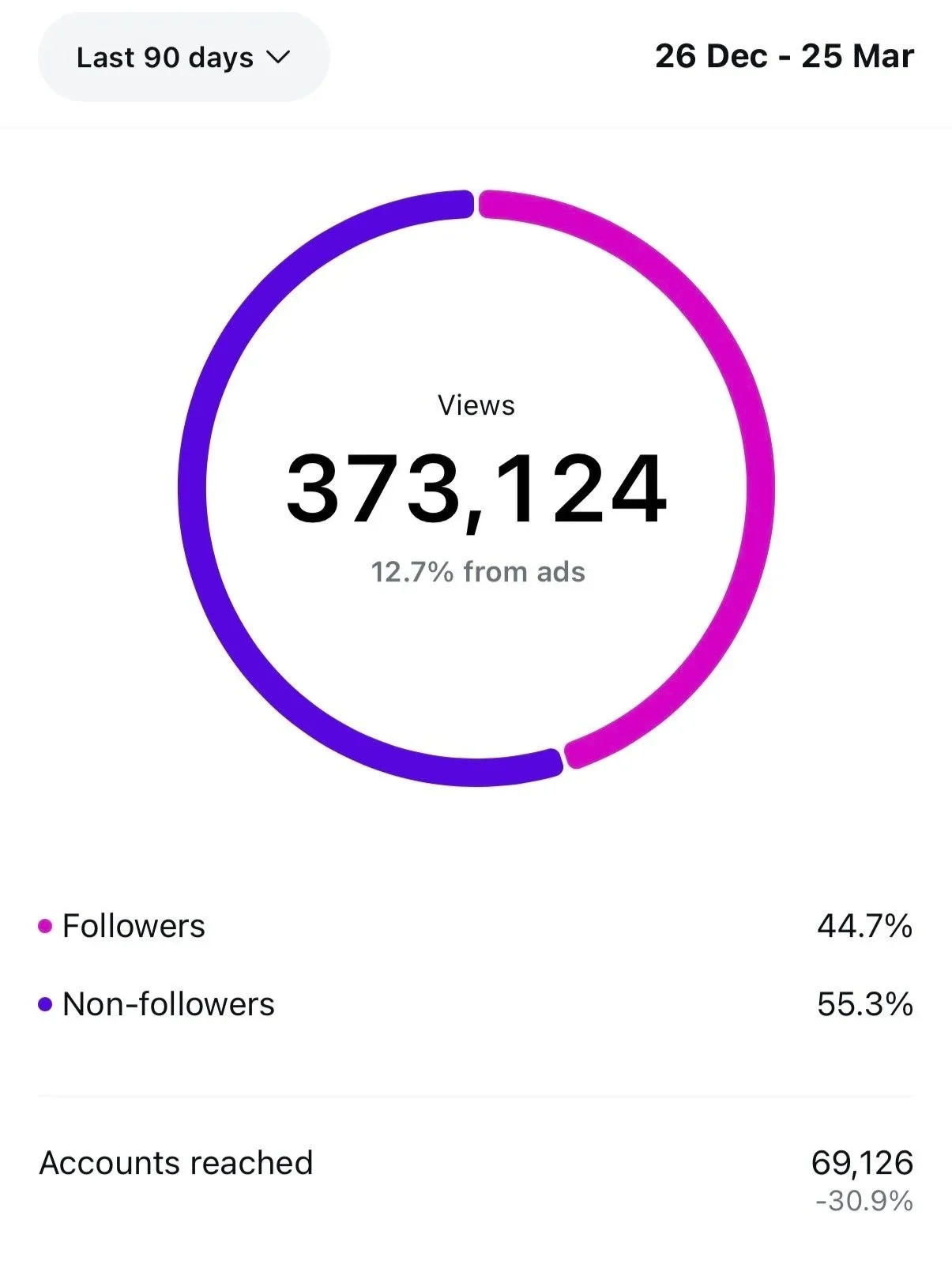
Grew Instagram following from 65K to 92.5K (+42%), delivering an average annual growth rate of 12.5% through consistent content strategy, improved engagement, and influencer collaborations.
Improved engagement rate by X%, driven by consistent and targeted content
Achieved X% increase in reach, particularly through video content
Influencer collaborations contributed to increased brand awareness and audience growth with a total revenue at X£.
Social media began generating measurable traffic and revenue, supporting product sales trackable in Google Analytics and Power BI.
Reduced reliance on Google Ads by strengthening organic performance and diversifying marketing channels
The key to successfully integrating social strategy into business is to focus on structured, repeatable execution that fits within broader business operations.
This begins with developing monthly and weekly content plans that are aligned with campaigns, key moments, and overall business priorities. Working closely with internal teams, including marketing, product, and communications, ensures all content is accurate, relevant, and fully integrated across the brand.
Establishing clear workflows for content creation, approvals, and publishing allows for efficiency and consistency, while adapting messaging across different audiences ensures relevance without losing a cohesive brand voice.
Performance data plays a central role in this process, informing decisions and allowing content to evolve and improve over time.
The result is a strategy that is not reactive, but considered, consistent, and ultimately results-driven. It enables brands to build stronger connections with their audience through clarity and consistency. Over time, this approach strengthens brand identity while supporting measurable business growth. It also creates a foundation that allows teams to scale content output without compromising quality.
content framework?
To create effective and consistent content, structure is essential. A clear framework allows content to remain balanced, purposeful, and aligned with both brand and audience.
Content can be divided into four key pillars. Education and insight-led content builds credibility by sharing industry knowledge, trends, and expertise, helping to attract and inform new audiences. Product or service-focused content showcases offerings in a way that highlights their value, positioning, and points of differentiation.
Behind-the-scenes content brings a human element to the brand, offering insight into processes, people, and culture. This helps build trust and a stronger emotional connection with the audience. Finally, engagement-led content is designed to encourage interaction, whether through entertaining, conversational, or interactive formats.
Together, these pillars create a well-rounded content strategy that is both engaging and strategically driven.
increasing engagement
increasing visibility
…and in theory?
Let’s say something complex: such as a multi-industry group operating across sectors including chemicals, automotive, sport, and hospitality, with no unified social media strategy.
Content can be fragmented across divisions, lacked consistency, and did not contribute to measurable brand or commercial outcomes.
Objective?
Direction?
Execution.
Audience?
Strategy.
Growth.
Establish a clear and cohesive social media presence across all divisions
Increase brand awareness and audience engagement globally
Position the group as both innovative and culturally relevant across industries
Drive traffic and support commercial objectives through social channels
Reduce reliance on paid acquisition by strengthening organic performance
Prioritise visually-led and high-reach platforms to unify brand presence. Shift content from purely informational to a more storytelling-led and lifestyle-driven approach. Introduced short-form video to increase visibility, engagement, and cross-industry reach.
Develop a structured content calendar aligned with key business moments, launches, and partnerships across divisions. Introduced a consistent posting rhythm and used performance data to optimise timing and content output.
Deliver a mix of content formats, including high-quality visuals, short-form video, and campaign-led storytelling, while maintaining a cohesive brand identity across all channels through close internal collaboration.
The Result/
Define key audience segments across sectors, including consumers, industry professionals, and lifestyle-driven audiences. Position the brand to balance innovation and expertise with lifestyle and cultural relevance, ensuring consistency while allowing each division to retain its identity.
Established clear content pillars to bring structure across all divisions:
Innovation & Expertise
Product & Performance
Lifestyle & Culture
Behind the Scenes
Introduce influencer and partnership strategies across relevant industries to expand reach and connect with new audiences. Leverage creator-led content to enhance credibility and reposition social media as an active growth and acquisition channel.
Increased overall brand visibility and cross-sector engagement
Growth in audience reach, driven by video and storytelling content
Social media became a measurable driver of traffic and commercial impact
Reduced reliance on paid channels through stronger organic performance